
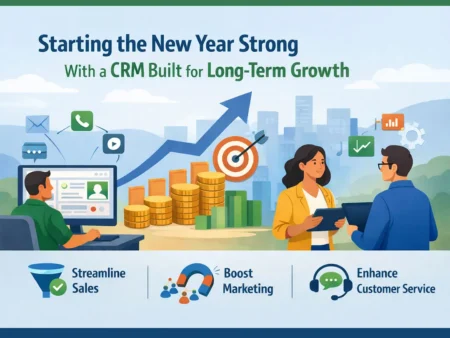
The beginning of a new year presents a valuable opportunity for every Tampa small business to evaluate systems, refine processes, and set a foundation for sustainable growth.
At this stage, implementing a customer relationship management system is one of the most important investments a company can make.
A properly built CRM creates structure, improves communication, and provides clarity across sales, marketing, and customer service efforts.
Why a CRM Matters More Than Ever
Businesses today handle a lot of customer data across many different channels. There is useful information in emails, phone calls, website inquiries, and social media messages. Without a central system, this information gets scattered and hard to find. A CRM keeps track of all customer interactions in one safe place, so teams can get the right information at the right time.
A CRM not only helps with organization but also with consistency. Customers expect quick answers and tailored communication. Spreading information can lead to missed opportunities and weakened relationships. A CRM makes sure that every interaction builds on the one before it.
The Advantage of Building a CRM Early in the Year
Starting or rebuilding a CRM at the beginning of the year gives you a fresh start in your business. We can set up new pipelines, update workflows, and improve data fields before habits become second nature. This time of year is also beneficial for setting goals, making plans, and making budgets.
Companies get a whole year of performance data by building the CRM early. This lets leaders analyze trends, see how many people are converting, and adjust their plans based on facts rather than guesses. This information becomes one of the company’s most valuable assets over time.
Improving Sales Efficiency and Accountability
A well-organized CRM improves sales by making it easy to see where customers are in their journey. You can track leads from first contact through conversion and follow-up. Automated reminders ensure no opportunity slips by.
Better visibility helps sales managers. They can use accurate metrics to monitor how busy people are, identify issues, and coach team members. This openness encourages responsibility and supports steady growth.
Strengthening Marketing and Customer Engagement
When you combine marketing with a CRM, the result is much more effective. Companies can focus their campaigns on customers based on their past behavior, likes, and dislikes. Companies can send targeted messages instead of generic ones that speak to specific groups of people.
After the sale, customers are more likely to stay engaged. A CRM helps businesses keep track of support requests, schedule follow-ups, and find chances to upsell or renew. Building relationships with customers over time keeps them coming back and increases their lifetime value.
Supporting Scalability and Long-Term Planning
When companies get bigger, manual systems often break down. Spreadsheets and inboxes may work for a while, but they don’t scale well. A CRM is meant to grow with the business, adding more users, services, and locations as needed.
The CRM’s standardized processes facilitate the onboarding of new team members. As operations grow, clear documentation and automated workflows reduce training time and maintain high quality.
Frequently Asked Questions About CRM Systems
Is a CRM only useful for sales teams?
No. A CRM supports sales, marketing, customer service, and management by centralizing data and improving collaboration.
How long does it take to implement a CRM?
Implementation timelines vary depending on complexity, but starting at the beginning of the year allows for thoughtful setup and testing.
Can a CRM be customized for different industries?
Yes. Modern CRM platforms are highly customizable and can be tailored to specific business models and workflows.
What happens if data is not entered consistently?
Consistency is critical. Clear guidelines and training ensure that the CRM remains accurate and valuable over time.
Building a CRM at the start of the year is a strategic decision that supports clarity, efficiency, and growth. For a Tampa-based small business, this investment creates a strong operational foundation that improves decision-making and customer relationships throughout the year. With the proper planning and expert guidance, a CRM becomes more than a tool. It becomes a growth engine. Businesses seeking professional CRM strategy, implementation, and support can rely on IB Systems to build solutions designed for long-term success.
Picture Source: AI-generated